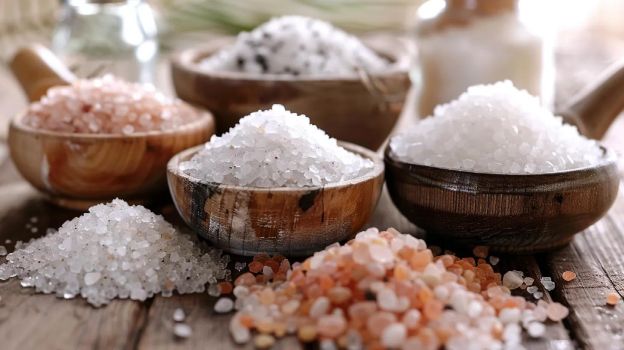
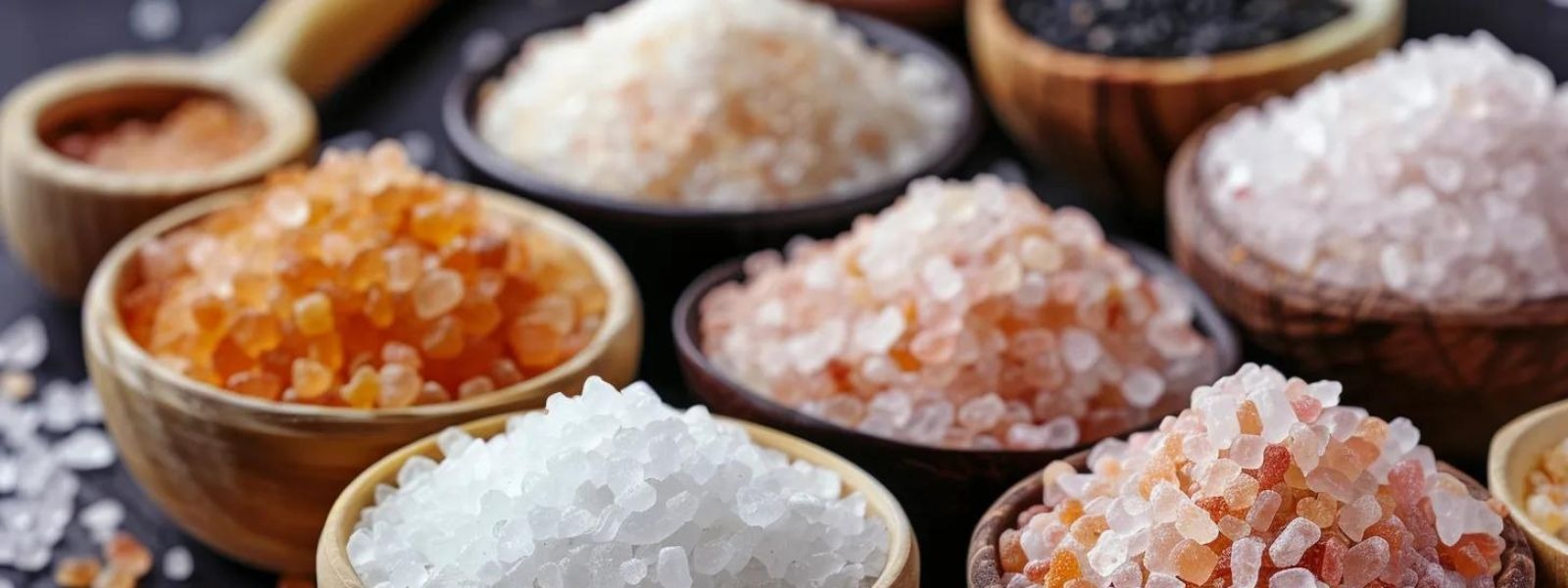
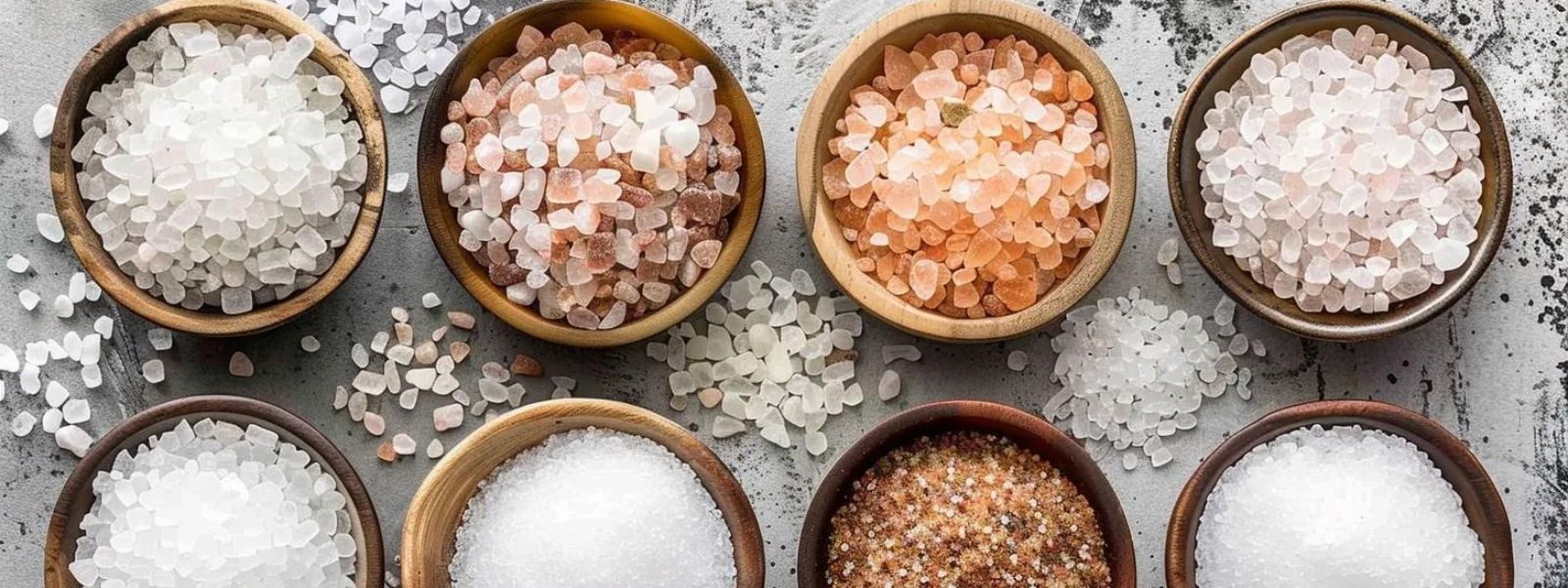
There are over 12 types of salt you can use in your kitchen, at a spa, or for wellness. The most common kinds include table salt, sea salt, kosher salt, Himalayan pink salt, and specialty finishing salts like fleur de sel. Each type has its own texture, flavor, color, and best uses.
Salt is so much more than the white stuff in your shaker. From the coarse grains your favorite chef pinches into a pan to the rosy crystals in a luxury salt room, different types of salts serve different purposes. Some are perfect for cooking. Others make your skin glow. And a few can even help you breathe easier when used in professional salt therapy settings.
In this guide, you will learn about 12 different types of salt, how each one is made, what makes it special, and when to use it. Whether you are a home cook, a wellness business owner, or just curious about what types of salt are there, this article has you covered.
Salt is a mineral made of two elements: sodium and chlorine. When these bond together, they form sodium chloride, or what we call table salt. Your body needs salt to function. It helps nerves send signals, muscles contract, and fluids stay balanced.
But here is the thing. Not all salt is created equal. The way salt is harvested, processed, and where it comes from can change its texture, taste, color, and mineral content. This is why we have so many different kinds of salts on store shelves today.
The American Heart Association recommends adults eat no more than 2,300 mg of sodium per day. That is about one teaspoon of table salt. Most Americans eat around 3,400 mg daily, which is well above this limit. Knowing about different types of salt can help you make smarter choices for your health.
For wellness business owners, understanding salt varieties is essential for offering the best client experience. The type of salt you use in your salt therapy facility directly impacts the quality of your services and your clients' results.
Get a free consultation to design your salt therapy room
While some sources list 10 types of salt or 12 types of salt, the truth is there are dozens of varieties worldwide. For this guide, we focus on the 12 most common and useful kinds of salt you will encounter.
These 12 different types of salt fall into a few main categories. Everyday cooking salts like table salt and kosher salt handle most kitchen tasks. Sea salts harvested from ocean water offer natural mineral content and varied textures. Specialty salts like fleur de sel serve as finishing touches on food. Colored salts like Himalayan pink or Hawaiian black add visual appeal and subtle flavor differences. And therapeutic salts used in professional salt therapy settings support respiratory and skin wellness.
Let's dive into each one.
Table salt is the most common type of salt found in homes around the world. It is what fills most salt shakers on kitchen tables and restaurant counters.
Table salt comes from underground salt deposits. It is heavily processed to remove impurities and other minerals. During processing, anti-caking agents are added to prevent clumping. Most table salt also has iodine added to it.
Table salt dissolves quickly because of its fine, uniform crystals. This makes it a good choice for baking, where you need salt to mix evenly into batters and doughs. It also works well for seasoning soups and sauces.
However, table salt has a sharper taste than other salts. Some people notice a slight metallic flavor from the iodine and additives. Many professional chefs prefer other options for this reason.
Iodine was first added to table salt in the 1920s. At that time, many people were not getting enough iodine in their diets, which caused thyroid problems. Adding iodine to salt helped solve this public health issue. Today, iodine is less of a concern for most people who eat a varied diet.
Kosher salt has become a kitchen favorite for home cooks and professional chefs alike. Its coarse, flat flakes make it easy to pinch and sprinkle.
The name does not mean the salt itself is kosher. Instead, it refers to the koshering process in Jewish cooking. This salt was traditionally used to draw blood out of meat, following religious dietary laws. The large, flat crystals are perfect for this task because they stick to the meat surface without dissolving too fast.
Kosher salt is pure. It has no iodine or anti-caking agents added. This gives it a clean, straightforward salty taste without any metallic aftertaste.
The larger flakes also make kosher salt easier to control. You can feel how much you are adding when you pinch it between your fingers. This is why so many recipes call for kosher salt by name.
One important note: kosher salt brands vary in crystal size. This means a tablespoon of one brand might taste saltier than a tablespoon of another. Always taste as you go.
Kosher salt works wonderfully for seasoning meat before cooking, salting pasta water, general everyday cooking, and brining poultry and other proteins.
Explore our certified halogenerator lineup for your facility
Sea salt is harvested from evaporated seawater. It comes in many textures and colors depending on where it is collected and how it is processed.
Salt farmers channel seawater into shallow pools or pans. As the sun and wind evaporate the water, salt crystals form. Workers then rake or collect these crystals. The process is simple and has been done for thousands of years.
Sea salt varies widely based on its source. Some are fine like table salt. Others are coarse and chunky. The mineral content in the water affects both the color and subtle flavor notes.
Fine sea salt works like table salt but with a cleaner taste. Coarse sea salt adds texture and crunch to dishes. Flaky sea salt like Maldon has delicate, pyramid-shaped crystals perfect for finishing.
Sea salt shines as a finishing salt. Sprinkle it on roasted vegetables, grilled meat, fresh salads, or chocolate desserts right before serving. The crystals add visual appeal and a satisfying crunch.
Fine sea salt can replace table salt in most recipes. Just remember that sea salt and table salt are not quite the same by volume, so you may need to adjust amounts.
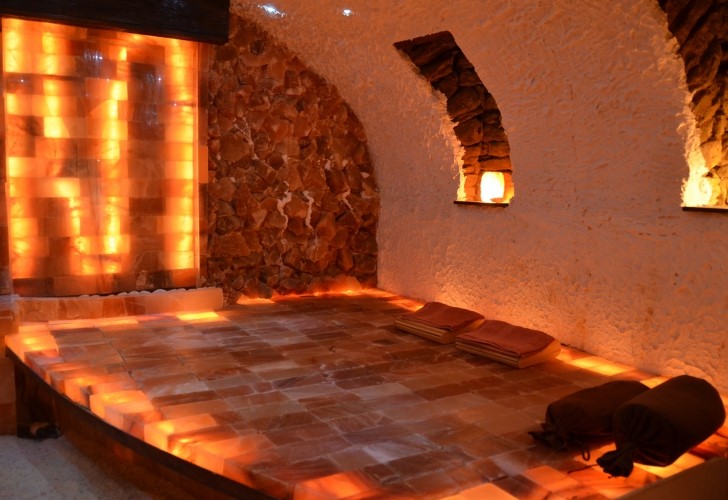
Himalayan pink salt has become wildly popular in recent years. You see it in fancy salt grinders, spa treatments, decorative lamps, and especially in professional salt rooms and salt caves.
Despite its name, this salt comes from the Khewra Salt Mine in Pakistan, not the Himalayan mountains themselves. The mine sits about 190 miles from the actual Himalayan range. The salt deposits formed millions of years ago from ancient ocean beds.
The pink color comes from trace minerals, especially iron oxide. Himalayan salt contains small amounts of about 84 different minerals, including calcium, magnesium, and potassium. These minerals give the salt its distinctive rosy hue.
This salt is incredibly versatile. In the kitchen, use it like any other salt for seasoning or sprinkle coarse crystals on finished dishes. Heat or chill large slabs to cook or serve food on salt blocks. Add it to bathwater for a relaxing soak.
But the most exciting use for Himalayan pink salt is in professional salt therapy settings. When ground into pharmaceutical-grade particles by a certified halogenerator, this salt becomes a powerful tool for respiratory and skin wellness.
See our complete range of salt therapy equipment and salt booths
Many people wonder about doing salt therapy at home with regular Himalayan salt. Here is the truth: effective salt therapy requires microscopic salt particles in precise concentrations. Simply sitting near a salt lamp or in a room with salt on the floor will not deliver therapeutic benefits.
Professional halogenerators from Salt Chamber grind pharmaceutical-grade salt to particles between 1 and 5 microns. This specific size allows the salt to reach deep into the respiratory system. DIY approaches cannot achieve this consistency, which is why investing in certified equipment matters for real results.
For those wanting salt therapy at home, Salt Chamber offers the SALT FX Home halogenerator. This gives you professional-quality therapy without the guesswork of makeshift solutions.
Celtic sea salt, also called sel gris or grey salt, is a moist, mineral-rich salt harvested from the Atlantic coast of France.
This salt gets its grey color from the clay in the salt pans where it is harvested. Workers use traditional wooden rakes to gather the salt by hand. The crystals stay in contact with the clay bottom, picking up minerals and moisture.
Celtic salt contains natural magnesium and other trace minerals. It has a slightly moist, sticky texture that sets it apart from drier salts. This makes it excellent for all-purpose cooking, rubbing on meat and poultry, sprinkling on hearty dishes like stews and roasted vegetables, and adding to soups for a mineral-rich boost.
Celtic salt works well for everyday cooking. Its coarse grains and rich flavor make it a solid choice for those who want something more interesting than plain table salt.
Contact us to discuss equipment options for your space
Fleur de sel means "flower of salt" in French. It is one of the most prized and expensive salts in the world.
As seawater evaporates in salt pans, a thin, delicate crust of crystals forms on the surface. These crystals look like tiny flowers, which gives the salt its poetic name. Salt workers called paludiers carefully skim these crystals from the water using wooden rakes.
The process requires perfect weather conditions: sunny, dry, and with gentle steady winds. Each salt marsh produces only about two pounds per day. This scarcity, combined with the labor-intensive harvesting, explains the high price.
Fleur de sel has small, irregular flakes with a moist texture. It dissolves slowly on the tongue, releasing a complex, briny flavor. The moisture content can be as high as 10%, compared to 0.5% for regular salt.
Traditional fleur de sel comes from Guérande, Brittany, in France. Similar salts are also harvested in Portugal, Spain, and other coastal regions.
This is strictly a finishing salt. Never cook with it, as heat destroys its delicate texture and wastes its unique qualities.
Use fleur de sel to top chocolate desserts and caramels, finish butter on warm bread, garnish salads and fresh tomatoes, and add elegance to grilled fish or meat. Think of fleur de sel as the caviar of salts. Save it for special moments when you want to impress.
Flake salt is known for its distinctive thin, pyramid-shaped crystals. Maldon Sea Salt from England is the most famous example.
Flake salt is made by slowly evaporating seawater at low temperatures. This slow process allows large, flat, pyramid-shaped crystals to form. The result is a light, airy salt with a satisfying crunch.
The shape of flake salt makes it perfect for finishing dishes. The crystals sit on top of food without dissolving too quickly. They add texture and bursts of saltiness with each bite.
Flake salt also looks beautiful. Its crystalline structure catches light and adds visual interest to plated food. Use it for topping chocolate chip cookies fresh from the oven, finishing steaks and other grilled meats, sprinkling on caramel desserts, and garnishing salads and eggs.
Request pricing on our turnkey salt room packages
Black salt comes in two main varieties: Hawaiian black lava salt and Himalayan black salt (kala namak). Despite the similar names, these are very different products.
This sea salt gets its striking black color from activated charcoal, which is added during processing. It originated in Hawaii and carries a subtle, earthy flavor. Hawaiian black salt is used mainly as a finishing salt. It looks dramatic on light-colored foods like seafood, eggs, or mashed potatoes.
Kala namak is a mineral salt that actually looks pinkish-grey, not black. It has a strong sulfurous smell and taste, similar to hard-boiled eggs. This unique flavor makes it popular in Indian cooking and vegan dishes where you want an eggy taste without eggs.
Hawaiian black salt works best for finishing and garnishing, while kala namak shines in Indian cuisine, vegan egg dishes, and chutneys.
Hawaiian red salt, also called alaea salt, has been used in Hawaiian cooking and culture for centuries.
The red color comes from alaea, a volcanic clay rich in iron oxide. When mixed with sea salt, the clay gives the crystals their distinctive rusty-red hue.
In Hawaii, alaea salt holds cultural and spiritual importance. It was traditionally used to bless and purify tools, canoes, and homes. It also plays a role in traditional Hawaiian dishes like kalua pig and poke.
This salt works well in traditional Hawaiian recipes, for finishing grilled meats and seafood, and for adding color and mild earthiness to dishes.
Shop our professional halogenerators and salt decor
Smoked salt is any type of salt that has been smoked over wood. Different woods produce different flavor profiles.
Salt is placed in a smoker and exposed to wood smoke for extended periods. Common woods include hickory, applewood, mesquite, and cherrywood. The salt absorbs the smoky flavors, which it then imparts to food.
Smoked salt adds a barbecue-like quality without firing up the grill. Use it on grilled or roasted meats, roasted vegetables, mac and cheese, baked potatoes, and Bloody Marys. A little goes a long way. Start with small amounts and taste as you go.
Pickling salt is a fine-grain salt without any additives. It is specifically designed for preserving and pickling foods.
Regular table salt contains anti-caking agents that can make pickle brine cloudy. It may also have iodine, which can darken pickles and give them an off flavor.
Pickling salt is pure sodium chloride. It dissolves completely and keeps your pickles crisp and clear. Use it for making pickles and fermented vegetables, canning and preserving, and any recipe where you need salt to dissolve completely with no residue.
Flavored salts combine salt with herbs, spices, citrus, or other seasonings. The options are endless.
Garlic salt mixes salt with garlic powder. Truffle salt is infused with aromatic truffle. Lemon salt combines with lemon zest. Herb salts blend with rosemary, thyme, or other dried herbs. Chili salt mixes with dried chili peppers.
Flavored salts offer a shortcut to bold flavors. Use them to season meat and vegetables quickly, rim cocktail glasses, add instant complexity to simple dishes, and give as thoughtful homemade gifts.
Talk to a salt therapy specialist about your facility needs
Salt does more than flavor food. It has a long history in health and wellness practices, and today salt therapy represents one of the fastest-growing segments in the wellness industry.
Salt therapy, also known as halotherapy, involves breathing in tiny salt particles. This practice began in Eastern European salt mines where workers noticed improved respiratory health compared to other miners.
Today, salt therapy happens in specially designed salt rooms and salt caves. A device called a halogenerator grinds pharmaceutical-grade salt into microscopic particles and disperses them into the air. When clients breathe in these particles, the salt helps thin mucus, reduce inflammation, and clear airways.
Research published in the National Library of Medicine shows halotherapy can improve lung function and quality of life for people with chronic respiratory conditions. The American Lung Association notes that salt therapy may help thin mucus and make it easier to expel, particularly for people with obstructive lung conditions.
The effectiveness of salt therapy depends entirely on the quality of equipment used. Proper particle size is critical. Salt particles must be between 1 and 5 microns to reach the lower respiratory tract. Larger particles simply get trapped in the nose and throat.
This is why professional-grade halogenerators matter so much. Salt Chamber's equipment is manufactured by a medical device company that complies with ISO standards (9001, 13485, 14001). This certification ensures consistent particle size, proper concentration levels, and reliable performance session after session.
DIY approaches to salt therapy simply cannot deliver these results. Sitting in a room with salt on the floor or near a salt lamp will not provide therapeutic benefits. The salt particles must be ground to precise specifications and dispersed at controlled concentrations. Only certified equipment can achieve this.
Explore our certified halogenerator lineup for your facility
For wellness business owners, salt therapy offers compelling ROI. Clients are actively seeking natural, drug-free wellness solutions. Salt therapy fills this need while creating a unique, memorable experience that differentiates your facility from competitors.
Salt Chamber has completed over 3,600 successful installations worldwide, working with major brands like The Ritz-Carlton, Four Seasons, JW Marriott, and The Woodhouse Day Spa. This track record demonstrates both the growing demand for salt therapy and the importance of working with experienced partners.
When you invest in quality equipment from the start, you avoid the costly mistakes that come with inferior products. Proper equipment means consistent results for clients, fewer maintenance issues, and a reputation for excellence that drives referrals and repeat business.
Many people want to experience salt therapy at home after discovering its benefits at a spa or wellness center. This has created a market for home salt therapy solutions.
However, home users face the same challenge as businesses: effective salt therapy requires professional-grade equipment. Simple salt lamps or salt diffusers cannot deliver therapeutic particle sizes.
Salt Chamber addresses this need with the SALT FX Home system. This brings the same technology used in professional facilities into a home-friendly format. Unlike DIY approaches, it delivers consistent, effective salt therapy that actually works.
View our salt booth models and find the right fit
Clients who experience regular salt therapy sessions often report relief from allergies, reduced asthma symptoms, clearer sinuses, improved breathing, better skin condition, and enhanced relaxation.
Salt therapy is considered complementary and works alongside medical treatment. Always recommend that clients consult their healthcare provider, especially for serious respiratory conditions.
Beyond the halogenerator, the complete salt therapy experience includes the room design and atmosphere. Many facilities incorporate salt decor elements like salt bricks and tiles, salt panels, and salt rocks and boulders.
These elements create the visual atmosphere clients expect while the halogenerator delivers the therapeutic salt particles. The combination of beautiful design and effective equipment creates an experience that keeps clients coming back.
Salt Chamber offers complete turnkey solutions that include design consulting, equipment, salt decor, and training. This end-to-end approach ensures your facility delivers results from day one.
Get a quote for complete salt room installation
With so many kinds of salt available, how do you pick the right one? Here are some simple guidelines.
Kosher salt or coarse sea salt works best for most cooking tasks. They are easy to control, have a clean taste, and dissolve well during cooking.
Fine salt dissolves more evenly in batters and doughs. Fine sea salt or table salt (if you do not mind the additives) works well here.
Choose a specialty salt with interesting texture or flavor. Fleur de sel, Maldon flake salt, or colored salts add visual appeal and satisfying crunch.
Coarse kosher salt or Celtic sea salt sticks to meat surfaces well and creates a nice crust.
Himalayan pink salt is popular for salt therapy applications, but the salt itself is only part of the equation. What really matters is using pharmaceutical-grade salt processed through certified equipment like Salt Chamber's halogenerators.
For business owners looking to add salt therapy to their offerings, Salt Chamber provides complete consulting services for medical and day spas, fitness centers, resorts and hotels, and longevity and wellness centers.
Ready to add salt therapy? Contact our team for a custom quote
Salt does not spoil, but it can clump or absorb odors if stored poorly.
Keep salt in an airtight container in a cool, dry place. Avoid storing it near the stove where heat and moisture can cause clumping.
Specialty salts with higher moisture content, like fleur de sel or Celtic salt, need extra care. Store them in sealed containers to preserve their texture.
For salt therapy businesses, proper storage of HaloSalt is equally important. Salt Chamber provides pharmaceutical-grade salt specifically formulated for use in their halogenerators, ensuring consistent quality and optimal therapeutic results.
Understanding different types of salt opens up new possibilities in your kitchen and wellness routine. From the everyday reliability of kosher salt to the luxury of fleur de sel, each salt has its place.
The key takeaways are simple. Use kosher or sea salt for cooking. Save specialty salts for finishing and special occasions. And remember that all salt contains sodium, so moderation matters no matter which type you choose.
For wellness enthusiasts and business owners, salt therapy represents an exciting frontier. The ancient practice of breathing salt-rich air has found new life through modern technology. When done right with professional-grade equipment, salt therapy delivers real benefits that keep clients coming back.
Salt Chamber has been the industry leader in salt therapy equipment and consulting since 2012. With over 3,600 successful installations, ISO-certified equipment, and comprehensive turnkey solutions, they make it easy to bring salt therapy to your facility or home.
Whether you are seasoning tonight's dinner or planning a new wellness business, salt has a role to play. And when it comes to salt therapy, quality equipment makes all the difference.

Leo Tonkin, with a decade of deep expertise in salt therapy, initiated SALT Chamber, a leading entity in the domain of salt therapy products and decor. As the inaugural Chairman of the Salt Therapy Association and Chair of the Respiratory Wellness Initiative from the Global Wellness Institute, he has played a pivotal role in broadening the accessibility and recognition of salt therapy globally. His commitment to developing advanced technology and educating the public on the benefits of salt therapy has solidified his position as a key figure in the industry, enhancing its credibility and trustworthiness.