A halogenerator is the machine that turns pure-grade sodium chloride into breathable dry salt aerosol for salt therapy. It is the active equipment behind halotherapy and within salt rooms.
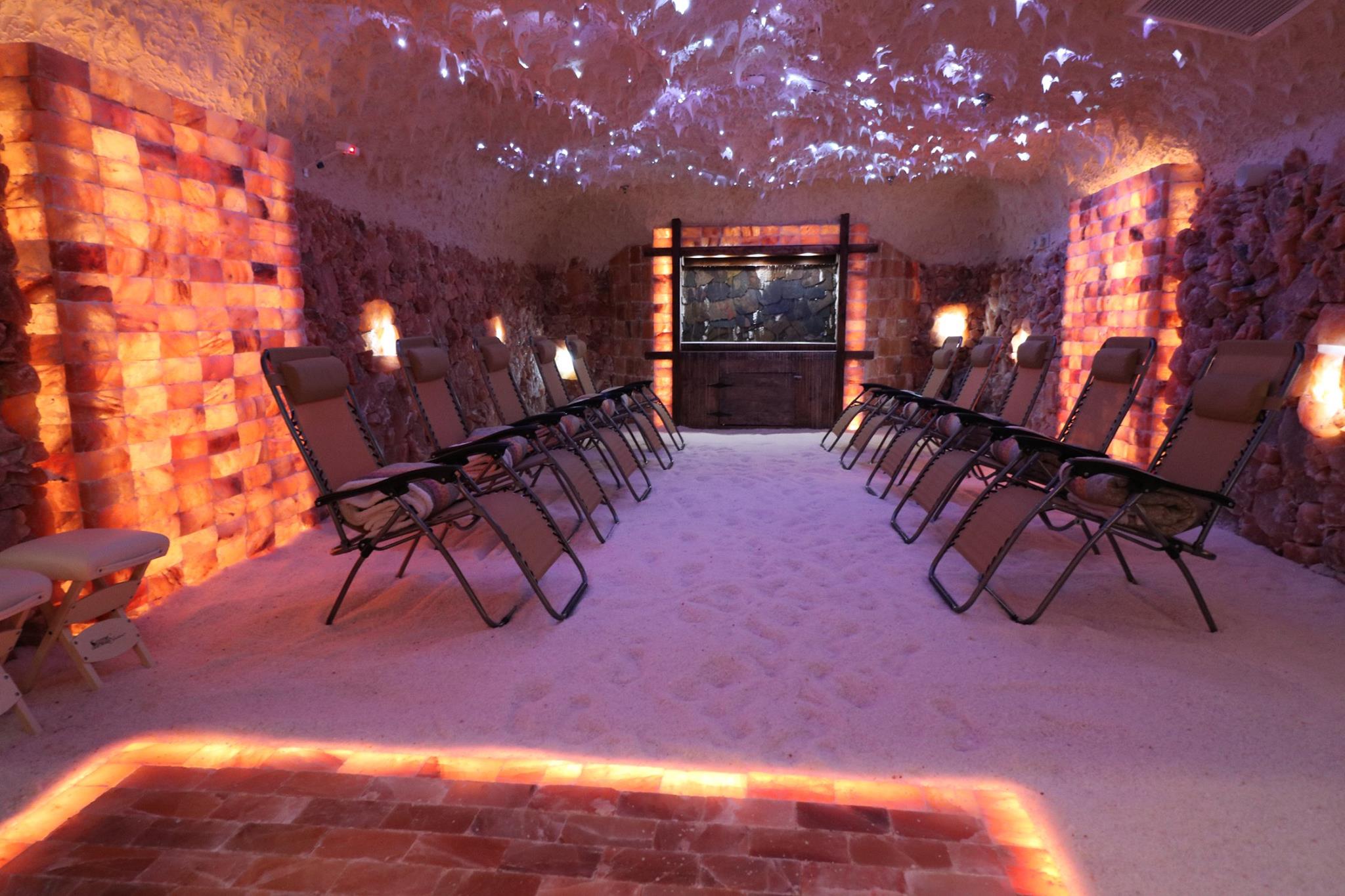
A salt room can look beautiful with it's salt décor, salt walls, and Himalayan salt bricks, but without the right dry salt aerosol generator, it is not delivering active dry salt therapy. The halogenerator grinds salt into micro-sized particles, moves those particles into the enclosed room or booth, and helps create the salt-air environment guests expect from a professional halotherapy session.
Salt Chamber® builds salt rooms, booths, and halogenerator systems for facilities that want to offer dry salt therapy in a controlled, professional setting. For buyers comparing equipment, the halogenerator is the first product to understand because it determines how salt is processed, dispersed, programmed, and maintained.
Modern halotherapy was developed to recreate the microclimate of natural salt mines and caves in a practical indoor setting. Instead of asking guests to spend hours in an underground salt mine, a halogenerator allows a facility to offer a shorter, controlled dry salt therapy session in a purpose-built room or booth, while delivering the benifits of halotherapy.
A halogenerator is an apparatus that produces dry salt aerosol for halotherapy. It intakes clean air, feeds pure-grade sodium chloride into a grinder or cutting mechanism, and disperses micro-sized salt particles into an enclosed salt room or salt booth. In simple terms, the halogenerator is the engine of a salt therapy room. The salt on the walls, floor, or décor creates atmosphere, but the halogenerator creates the active aerosol that guests inhale during a halotherapy session.
For business owners, the quality of the halogenerator matters because it affects the guest experience, room performance, and long-term reliability of the service. A spa, wellness center, resort, fitness facility, medical spa, or recovery center should treat the halogenerator as core infrastructure, not as an accessory.
A halogenerator works by feeding dry, pure-grade sodium chloride into a grinder, cutting the salt into micro-sized particles, and using a blower or fan to push the dry salt aerosol into the enclosed treatment space. The process is mechanical, controlled, and designed for dry salt therapy sessions.
First, dry salt is placed into the feeder mechanism. The feeder releases salt into the grinder at a controlled rate based on the session settings.
Second, the grinder uses a medical-grade stainless steel blade or cutting mechanism to crush, cut, and grind the salt crystals into fine particles. This step is what separates real halotherapy equipment from passive salt décor.
Third, the blower or fan moves the dry salt aerosol through a sleeve or outlet into the salt room or booth. The halogenerator is usually mounted outside the treatment space so it can intake clean air rather than recirculating salty air through the machine.
Fourth, the system runs according to the selected session length and concentration settings. Our commercial halogenerators can be programmed for different session needs, which helps operators match the experience to the room type, guest flow, and service menu.
For buyers comparing a halogenerator for salt therapy, the key point is this: the halogenerator must consistently grind and disperse dry salt aerosol into the right environment. A salt room without that controlled aerosol process is mainly a themed room with salt décor.
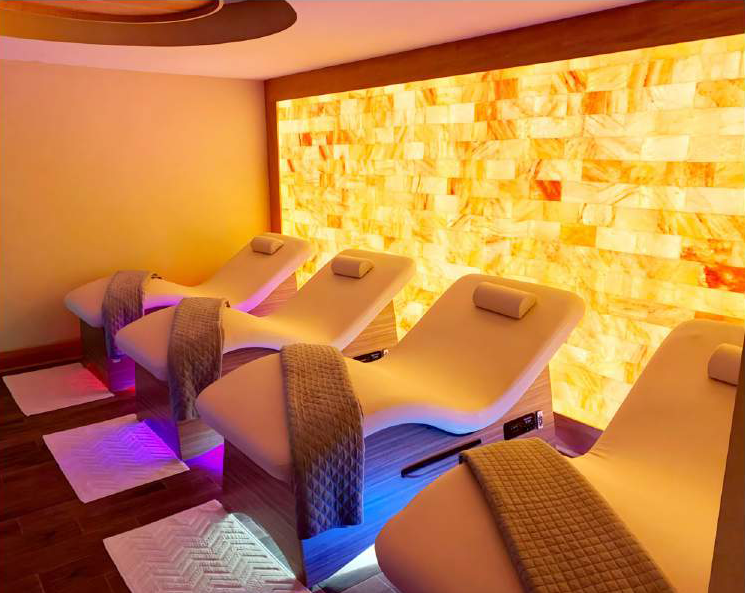
This is one of the most common points of confusion for facility owners. Himalayan salt walls and floors can create a beautiful wellness atmosphere, and they may support the visual identity of a salt room, but they do not replace the halogenerator.
Dry salt therapy requires a halogenerator because the therapeutic environment is based on airborne dry salt aerosol. Salt bricks, salt panels, salt lamps, and loose salt décor do not disperse the micro-sized sodium chloride particles used in active halotherapy. A professional salt therapy room needs both design and function. The design makes the room calming, brandable, and marketable. The halogenerator makes the session active by producing dry salt aerosol.
That distinction protects the buyer. A room that looks like a salt cave may not be a true halotherapy room if no dry salt aerosol generator is present. When comparing proposals, ask where the halogenerator is installed, what salt it uses, what output range it offers, and how the system is serviced.
A halogenerator uses dry, pure-grade sodium chloride, not table salt, Epsom salt, Himalayan décor salt, or wet salt solutions. The salt must be dry for the grinder to cut it into fine aerosol particles and disperse it so that it can be inhaled properly.
The wrong salt can affect performance and maintenance. Salt that is damp, blended, irregular, or not intended for halogenerator use may clog the feeder, stress the grinder, or create inconsistent output.
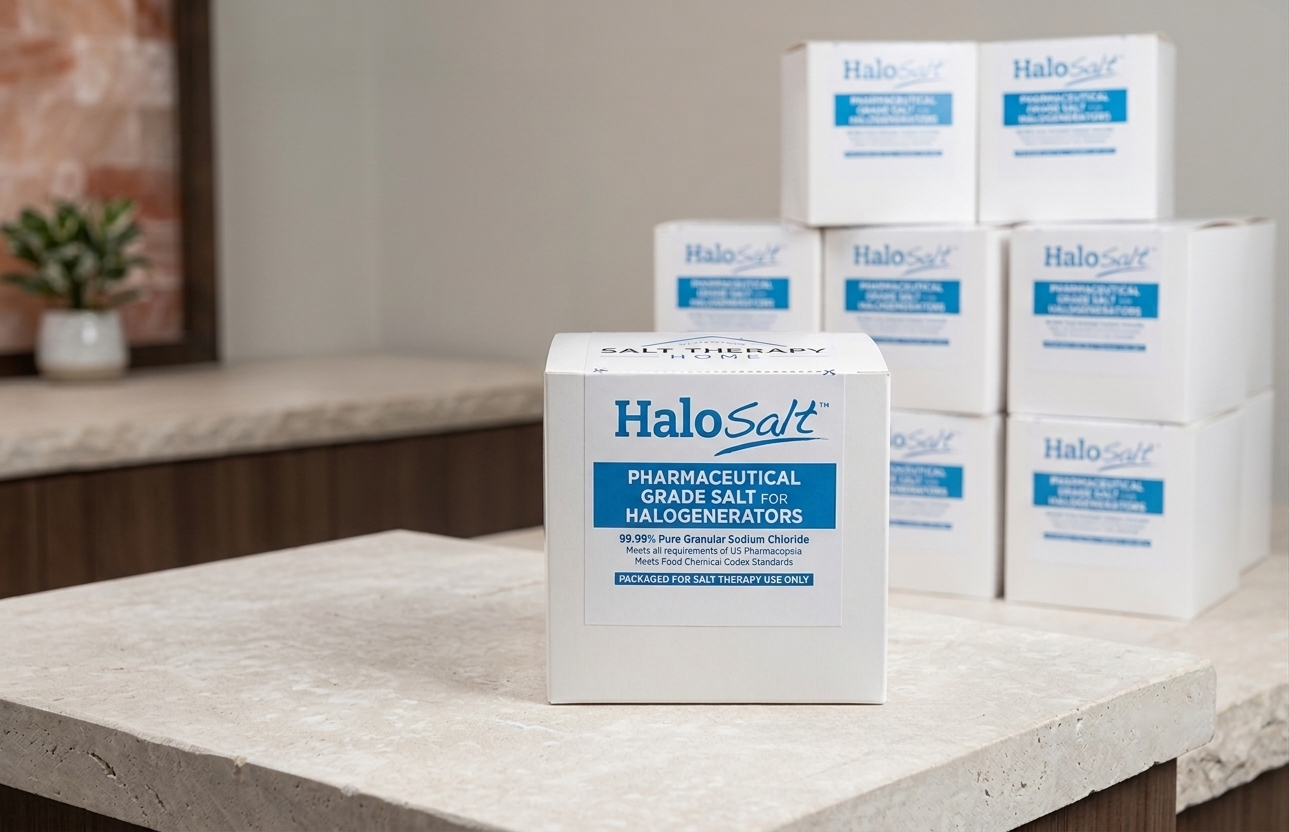
Our halogenerator systems are designed to use HaloSalt™, a pure-grade sodium chloride product made for dry salt aerosol generation. The goal is consistency: the salt should feed correctly, grind predictably, and support reliable operation session after session.
For operators, salt selection is an operating-cost that should be taken into account. The ongoing consumable is small compared with many wellness services, but it still needs to be planned into the business model. A professional halogenerator should make it clear how much salt it consumes, how to refill it, and how often the unit needs to be cleaned.
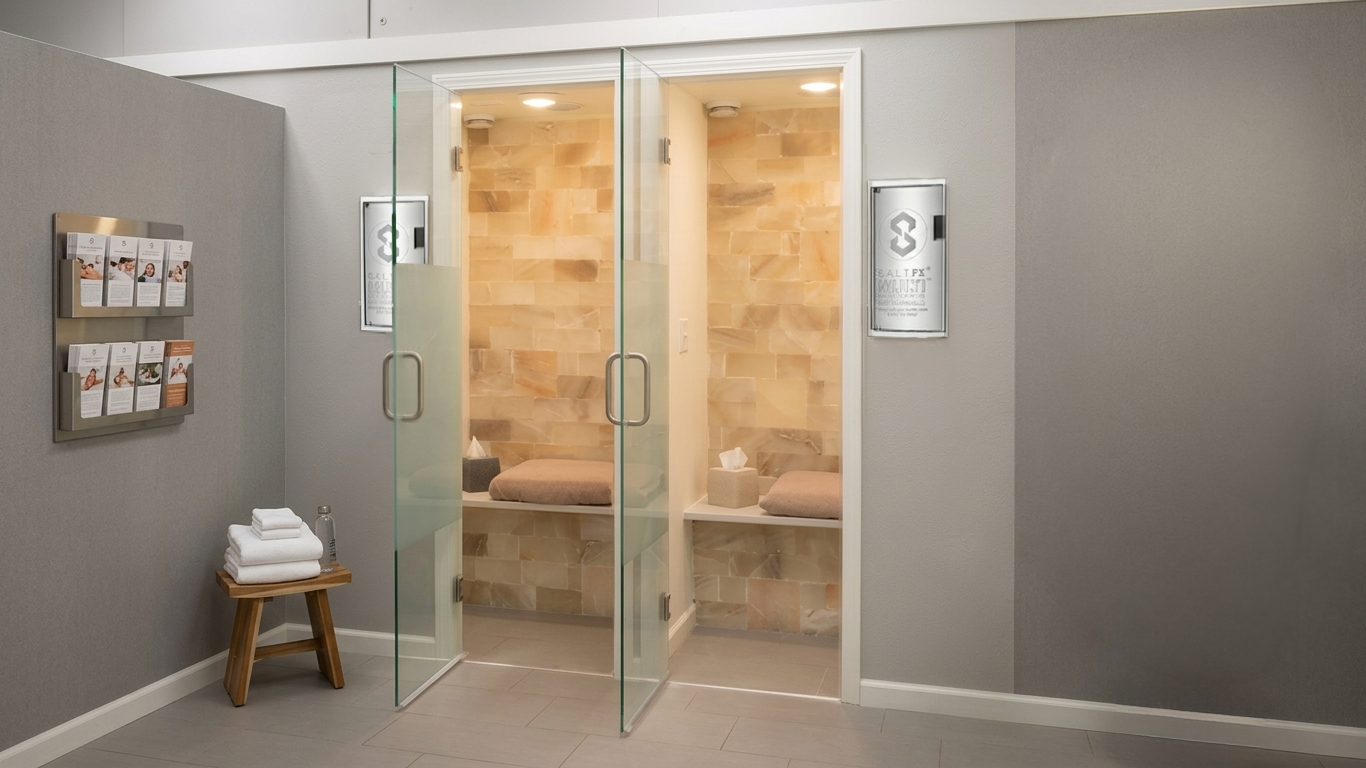
The right Salt Chamber® halogenerator depends on the size of the space, the session type, and the level of output the facility needs. Larger commercial salt rooms need higher capacity, while smaller booths and compact wellness spaces need a lower-output unit matched to the enclosed air volume.
For commercial facilities, the main choice is usually between SALT FX® PRO and SALT FX® MULTI. SALT FX® PRO is the higher-output option for larger salt rooms. SALT FX® MULTI is a compact commercial option for smaller rooms, booths, and wellness suites. The SALT FX® Aero is designed for personal, home, travel, AERO Salt Booth, or other or compact space applications. Size and use case should be clear before comparing price.
A buyer should not pick a halogenerator by price alone. The better question is whether the unit matches the space, session length, guest volume, service model, and maintenance expectations.
When buying a halogenerator, look for documented manufacturing quality, particle-size performance, adjustable salt consumption, clear warranty terms, and service support based in the United States. These criteria matter because a halogenerator is commercial equipment that needs to be able to stand up to daily-use.
Start with manufacturing standards. Salt therapy equipment should come from a company that can document quality systems and reliable production practices. We are ISO certified 9001, 13485, and 14001, which supports our focus on quality management, medical device-related systems, and environmental management.
Next, ask about particle size. A halogenerator should produce fine dry salt aerosol that are, on average, 1 micron or smaller, so that the salt particles can remain airborne and move through the salt room or booth environment.
Salt consumption rate is another buying signal. Adjustable output gives operators more control over the session and helps match the machine to the room. SALT FX® PRO is adjustable from 0-500 g/h, while SALT FX® MULTI is adjustable from 0-100 g/h. A facility should not buy a unit without knowing whether its output range fits the intended space.
Warranty terms should be clear before purchase. Ask what is covered, how long coverage lasts, what maintenance is required, and how service claims are handled. A strong warranty is only useful when it is paired with accessible support.
Service and support should also be part of the buying decision. For a facility owner, US-based support can reduce friction when questions come up after installation. We are headquartered in Boca Raton, Florida, and support operators who need help planning, installing, and maintaining salt therapy equipment.
Schedule a facility-specific plan and buying recommendation through our contact page.
A halogenerator is used to produce dry salt aerosol for halotherapy sessions. It grinds puregrade sodium chloride into fine particles and disperses them into a salt room or salt booth.
A halogenerator is not the same as a salt lamp. A salt lamp is decorative, while a halogenerator is active equipment that creates the dry salt aerosol used in professional salt therapy.
A salt room needs a halogenerator if it is meant to provide active dry salt therapy. Salt décor can shape the atmosphere, but the halogenerator creates the airborne dry salt aerosol.
A halogenerator should use dry, pure-grade sodium chloride made for dry salt aerosol generation. Salt Chamber systems are designed to use HaloSalt™, not wet salt, table salt, or decorative Himalayan salt bricks.
Salt Chamber buyers should compare room size, salt output, air volume, particle-size documentation, warranty terms, and service support. The right choice is the unit that fits the facility’s space, session model, and long-term operating needs.
A halogenerator is the core equipment that makes dry salt therapy possible. Choose the system by performance, fit, serviceability, and support, not by appearance alone.

Leo Tonkin, with a decade of deep expertise in salt therapy, initiated SALT Chamber, a leading entity in the domain of salt therapy products and decor. As the inaugural Chairman of the Salt Therapy Association and Chair of the Respiratory Wellness Initiative from the Global Wellness Institute, he has played a pivotal role in broadening the accessibility and recognition of salt therapy globally. His commitment to developing advanced technology and educating the public on the benefits of salt therapy has solidified his position as a key figure in the industry, enhancing its credibility and trustworthiness.