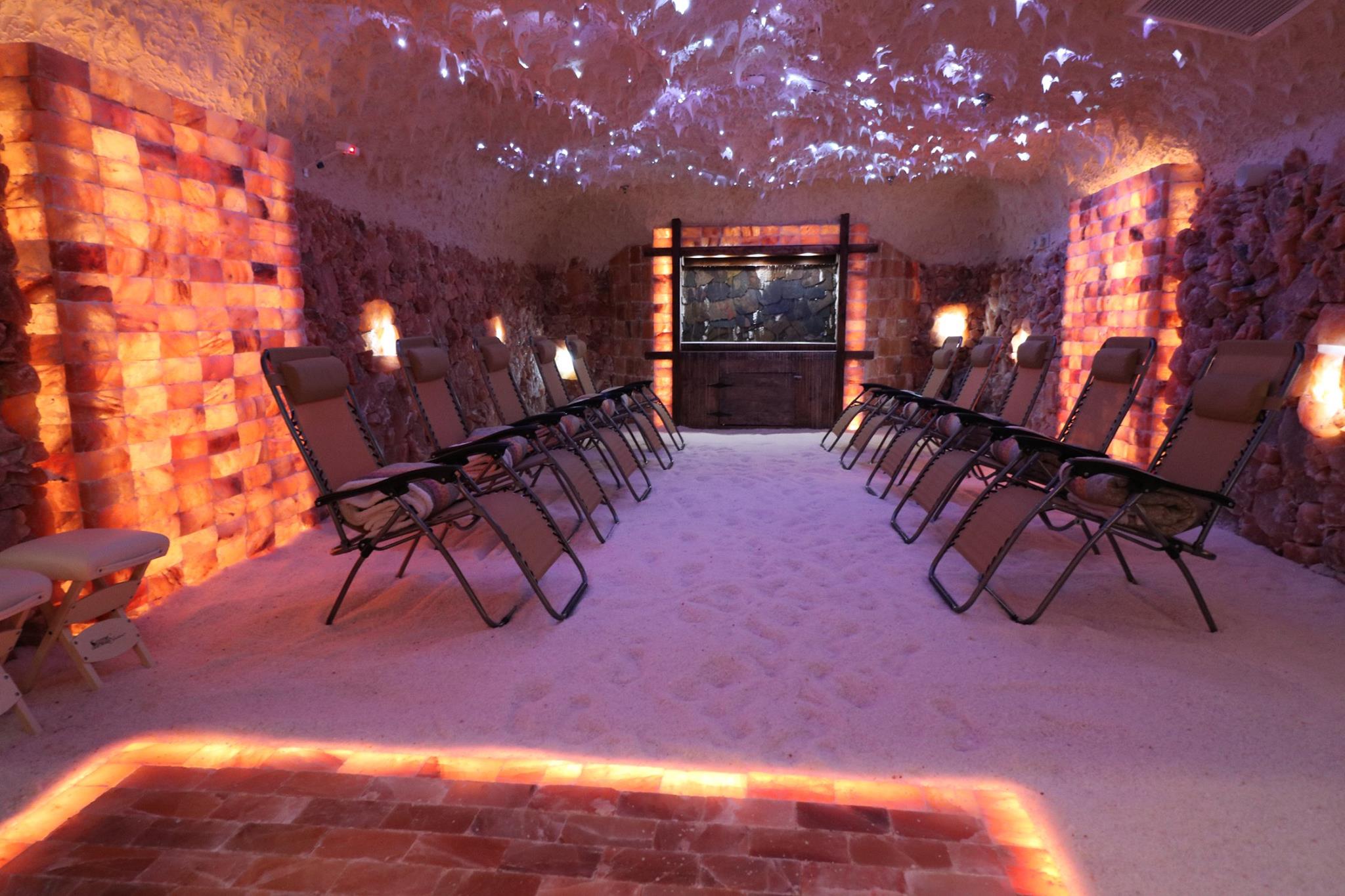
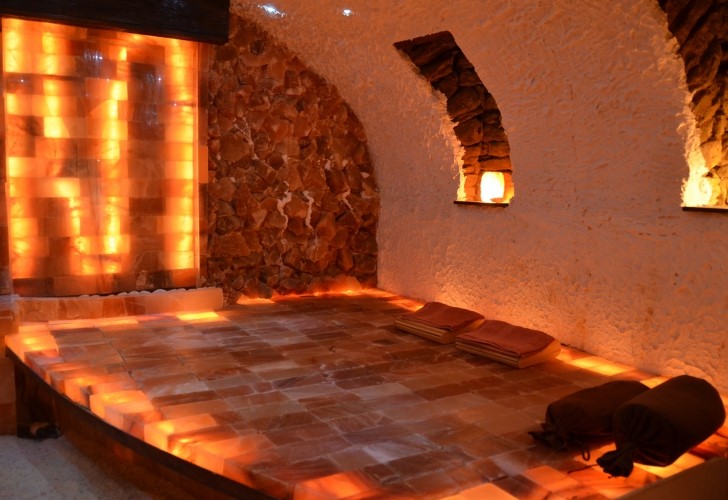
In this episode, Jessie Henderson from Salt Chamber, Inc. shares her approach to cleaning and maintaining Himalayan pink salt bricks. She discusses dry dusting, cleaning products and moisture precautions, maintenance schedules for homes and spas, humidity, and replacing damaged bricks.
John Maher: Welcome to the Salt Chamber Podcast. I'm John Maher. Today I'm joined by Jessie Henderson, Senior Salt Therapy Consultant at Salt Chamber Inc. Salt Chamber specializes in designing and building salt therapy spaces and providing halotherapy equipment, Himalayan salt decor, training and ongoing support for spas, resorts, wellness centers, and more. Today we're talking about how to clean and maintain Himalayan pink salt bricks. Welcome, Jesse.
Jessie Henderson: Hello there. Thank you for having me.
John: Absolutely. Jesse, what's the safest way to remove dust and fingerprints or light surface debris from a Himalayan pink salt brick wall without damaging and dissolving the salt?
Jessie: Yeah, that's a great question. A lot of people think that you have to clean it. I will say the easiest answer is you really don't. Number one, Himalayan salt is highly antibacterial. It basically disinfects everything that it's touching. So one, it's not really ever dirty. Two, if you are seeing debris or fingerprints, you could take a nice light, dry microfiber cloth or Swiffer duster. That's the best first method. We always say dry before wet because it is salt and salt can dissolve or break down, degrade, when it's wet. If you absolutely have to wipe it with something, we always recommend either an all natural cleaner like a vinegar/water/salt solution, or just a quick, very lightly damp microfiber cloth, wipe that free and then dry it off. Most of the time we say never use water, sprays, disinfectants on anything salt.
John: So talk a little bit more about that and what cleaning products or disinfectants or techniques that you should never use directly on a pink salt wall and why?
Jessie: Yeah. I mean, essentially it is salt. It's a natural element of the earth. It's not a brick or a stone. So the more you wipe it, the more layers, tiny layers, will come off and you'll see that degradation over time. So ultimately we always say dry before wet. Don't use anything wet on anything salt related if you don't have to. Again, it is an antibacterial, antimicrobial agent itself, so you really don't need to use a cleaner or any type of chemicals. Separately, we like to use what's called Force of Nature. It actually saves on plastic and saves you money and you have it for the whole year and it comes in a little tube and it's natural vinegar, salt, and water. You hit a button, it hydrogenizes, it puts it all together in a great mixture, and you can have that for weeks and months to clean your entire spa.
Jessie: So just using a natural cleaner or just a Swiffer duster, microfiber cloth, quick wipe down, maybe once a month, it really does depend on where your wall is, right? If it's in your front end and there's no halo generator blowing crushed salt on it continually, you might not need to ever wipe it down. It should be perfectly beautiful all the time and dry. If you're in a salt room and there's continual salt blowing through the air and things building up over time, a Swiffer duster might be really great, maybe once every other week, just to make sure it's free from salt powder on the wall.
John: People sometimes will have a salt room in their home, or a salt wall in their room for a decorative wall. Should that be inspected and cleaned, and how often? And does the maintenance schedule differ in a home versus a busy spa or wellness center or sauna or a commercial salt room?
Jessie: I mean, obviously you're going to want to make sure things appear clean. Again, salt is clean. It's antibacterial, so you rarely need to wipe it down if it's a wall. But in a home, that's your own preference. Again, it's antibacterial. If you think it looks dusty and dirty, you can go ahead and wipe that from time to time. Most of the time people are not using salt as frequently at home. In a spa, you might run 8 to 10 sessions a day, 5 sessions a day. At home, you might do it every other day, maybe twice, three times a week with salt therapy or something that might affect that salt wall. But no, the maintenance is very easy. This is a permanent structure. So once you've built a salt wall with the proper methods, it's there. It's permanent. You don't really have to do much maintenance of any kind, maybe a Swiffer duster every once in a while to keep it looking fresh and clean.
John: Are there any warning signs that maybe some excess humidity or some other environmental issue might need attention in your room where you have the salt wall installed?
Jessie: Yep. Not so much an environmental issue that I would know of, or that we've heard of, but really the humidity is number one. For instance, I put these in dry aging meat rooms. If they get 60 to 75% humidity, the salt wall's falling apart. It's breaking apart. It's a dry aging meat room. It's supposed to. That's fine. But six months to a year, it's going to be gone. They have to rebuild that wall. If you want to keep and maintain your wall perfect, forever, you really need to maintain that entire environment around the wall about 40 to 50% relative humidity or less.
John: And when a salt brick becomes stained or chipped or damaged, can that individual brick be cleaned and repaired or replaced without having to replace the entire wall?
Jessie: Often you would replace it. Most of the time, if salt chunks off, you won't necessarily be able to repair it, I guess you would say. You can, depending on how you build the wall, you can sometimes pry that one brick off and replace it with the same, secure, eco-adhesive that you use to build the wall. Often you might end up breaking a couple around it, but if you can get one, two, three, four bricks off and just replace those, that's perfectly fine. Most of the time it doesn't happen because people aren't bumping up against the wall or using it for anything. It's all decor, architectural beauty. So that's very rare, but if it does happen, you can replace one brick at a time if needed.
John: All right, well, that's really great information, Jessie. Thanks again for speaking with me today.
Jessie: Of course. Happy to do so.
John: And for more information about Salt Chamber, you can visit the website at saltchamberinc.com or call 561-556-3322.
Jessie: Thank you.

Leo Tonkin, with a decade of deep expertise in salt therapy, initiated SALT Chamber, a leading entity in the domain of salt therapy products and decor. As the inaugural Chairman of the Salt Therapy Association and Chair of the Respiratory Wellness Initiative from the Global Wellness Institute, he has played a pivotal role in broadening the accessibility and recognition of salt therapy globally. His commitment to developing advanced technology and educating the public on the benefits of salt therapy has solidified his position as a key figure in the industry, enhancing its credibility and trustworthiness.